Games Slacklining for Beginners: Setting Up and Finding Your Balance Rules
how to playSlacklining for Beginners: Setting Up and Finding Your Balance
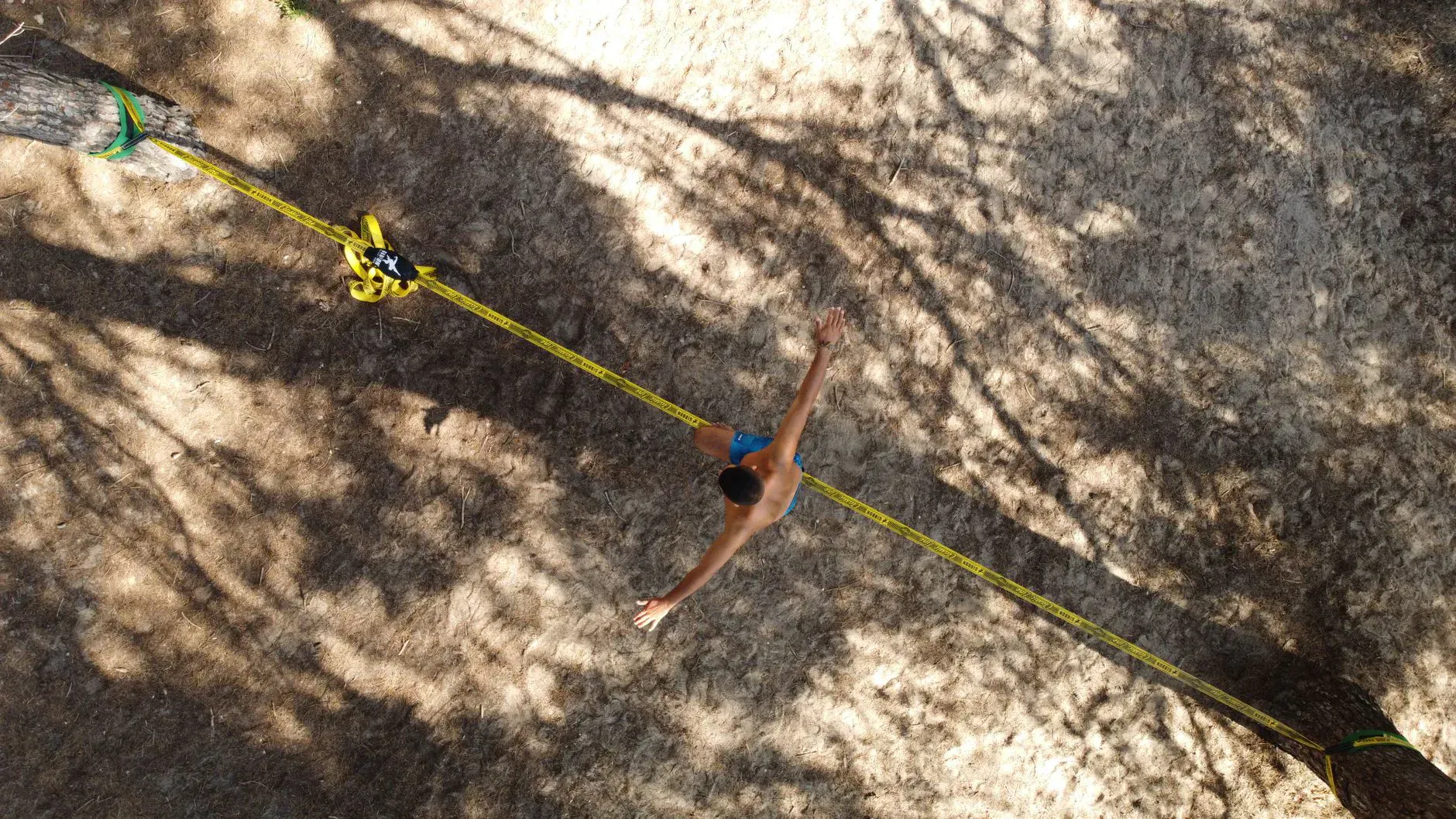
Slacklining is the simple, infuriating, and oddly meditative game of walking a length of flat nylon webbing strung between two trees. Unlike a tightrope, the line has give in it, so it bounces and sways under you, which is exactly what makes it fun and exactly what dumps you in the grass for the first week. The good news is that a backyard slackline kit goes up in about ten minutes with a ratchet, the learning curve is steep but short, and kids often pick it up faster than adults because they are not overthinking it. Here is how to rig the line safely, protect your trees, and take your first balancing steps without eating dirt every time.
- 1 at a time (take turns) PLAYERS
- AGES 5+ with a spotter
- 10 min SETUP
- Two trees about 10 to 15 ft apart
What you need
- A slackline kit with webbing and a ratchet tensioner
- Two sturdy living trees about 10 to 15 ft apart (or solid posts)
- Two tree-protection pads or thick sleeves to wrap the trunks
- A flat, soft landing area like grass underneath the whole line
- A friend to spot you for the first few sessions
How to play slacklining for beginners: setting up and finding your balance
- Pick two solid anchorsChoose two healthy living trees at least 8 to 12 inches thick, spaced roughly 10 to 15 ft apart for a beginner. Closer anchors give you a tighter, easier line to start on. Avoid thin saplings, dead trees, and anything that flexes when you push it.
- Protect the trees firstWrap each trunk with a tree-protection pad or a folded towel before the webbing touches it. The webbing under tension can cut into bark and strip a tree's cambium layer, which can kill it. Tree protection is not optional, it is the rule that keeps you welcome to do this again.
- Run the webbing and ratchetLoop the main line around one protected trunk, then feed the other end through the ratchet system anchored to the second trunk. Most backyard kits use a two-part ratchet line, so follow the kit's threading exactly. Keep the line low, about knee height, for your first weeks.
- Tension the lineCrank the ratchet until the line is taut but not banjo-tight. A little sag is fine and actually friendlier for learning. Once it holds your weight without sagging to the ground, double-check that the ratchet is fully locked and the webbing is not twisted.
- Mount with one foot and a spotterStand at one end, place one bare foot along the line (lengthwise, not across), and have your spotter offer a shoulder or hand. Stand up onto the line with your arms high and your eyes fixed on the far anchor, not on your feet. Expect to wobble hard. That wobble is your legs learning.
- Balance, then walkBefore walking, just practice standing on one foot for a few seconds with your knees soft and your arms moving freely to counter the sway. Once you can hold a balance, take slow, deliberate steps toward the far tree, pausing to rebalance between each one. Looking ahead at a fixed point is the single biggest trick.
- Dismount and resetStep or hop off to the side onto your soft landing area whenever you lose it, which will be often at first. Walk back to the start and go again. Short, frequent tries beat one long frustrating grind, and your balance improves session to session more than minute to minute.
Scoring
- Slacklining is a skill challenge, not a points game, so most people just track personal bests
- Count how many steps you take before falling and try to beat it
- Time how long you can stand on the line without touching down
- For a group, set a turn-based ladder: everyone tries to walk the full line, last one standing across wins bragging rights
- Kids love a simple distance goal: touch the far tree before stepping off
Distance & setup
Fun variations
- Beginner short line: keep anchors 10 ft apart and the line knee-high for the easiest, steadiest setup.
- Slackline for kids: rig it even lower (ankle to shin height) with a parent walking alongside as a moving handrail until they find their balance.
- Tricklining: once you can walk it, advance to bounces, turns, and sitting on the line, which a higher-rated webbing handles better.
- Two-line setup: some learners string a second, higher line as a hand rail to hold while they practice on the lower walking line.
Slacklining for Beginners: Setting Up and Finding Your Balance rules FAQ
How do you set up a slackline between two trees?
Wrap both trunks with tree-protection pads, loop the webbing around one protected tree, then feed the other end through the ratchet anchored to the second tree and crank it taut but with a little give. Keep the line low at knee height and the trees about 10 to 15 ft apart for a beginner. Always check the ratchet is fully locked before you stand on it.
Is slacklining hard for beginners?
The first session is genuinely hard because the line sways and your legs shake, but almost everyone is taking a few steps within a couple of short sessions. The trick is to keep your eyes on the far anchor instead of your feet, hold your arms high, and start with one foot before trying to walk. Short, frequent practice beats one long grind.
What age can kids start slacklining?
Kids as young as five can start on a low line with a parent spotting them, and many pick it up faster than adults because they overthink it less. Rig the line low (ankle to shin height) so a fall is a tiny hop down, and walk alongside them as a moving handrail at first. Always supervise and keep the landing area soft.
Do slacklines damage trees?
They can, which is why tree protection is mandatory. Bare webbing under tension can cut into the bark and strip the layer just under it, which can damage or kill the tree. Wrap each trunk with a proper tree-protection pad or a thick folded towel and you protect both the tree and your right to keep slacklining there.
How high should a slackline be off the ground?
For beginners and kids, keep it low, around knee height or even lower, so any fall is a short step down onto grass. Higher lines look impressive but turn a routine wobble into a real fall. Raise the line only once you can walk a low one confidently, and never set up over hard ground, rocks, or pavement.
How far apart should the trees be for a beginner slackline?
About 10 to 15 ft apart is the sweet spot for learning. A shorter line is tighter and steadier, so it sways less and is easier to stand on. Longer lines (25 ft and up) bounce and dip dramatically, which is why experienced slackers use them but beginners should not start there.
Ready to play?
Grab a set and start your league this weekend. We ranked the best slacklining for beginners: setting up and finding your balance sets for every budget.