
Games Backyard Cricket: Official Rules
how to playBackyard Cricket: Official Rules & the Unofficial House Rules
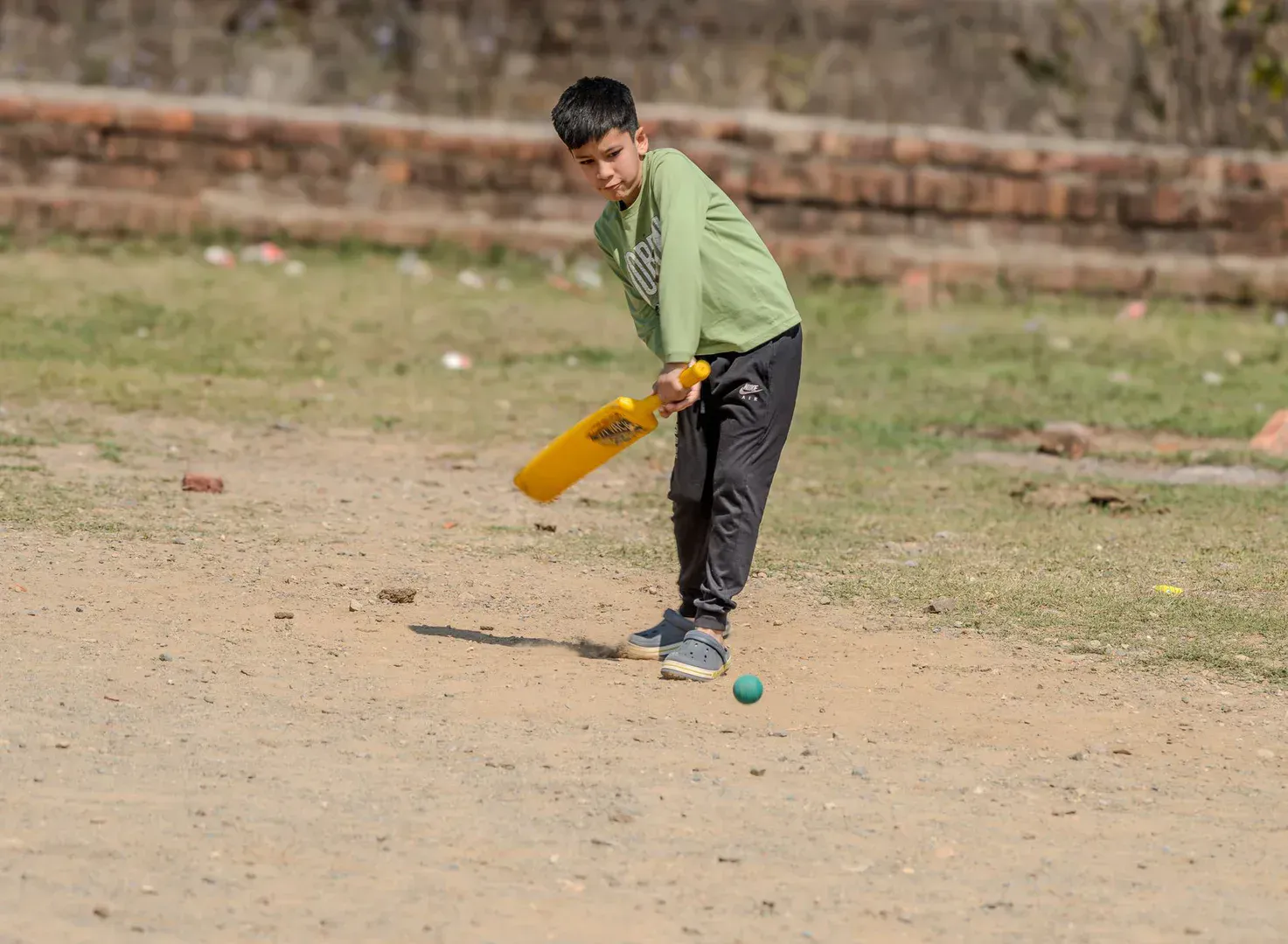
Backyard cricket is the loose, anything-goes cousin of the real game, and it is built almost entirely out of house rules that get passed down and argued over every summer. You do not need a pitch, a full team, or even proper gear. A plastic bat, a tennis ball, and a bin or a chair for stumps is enough. The fun lives in the unofficial rules that make a small yard work, like tippity-run when you are short on fielders, one-hand-one-bounce catches off the shed wall, and the dreaded auto-out for clearing the fence into the neighbor's yard. Here is how to set it up and which house rules to agree on first.
- 2 to 12 (works great with small groups) PLAYERS
- AGES 6+
- 5 min SETUP
- Any backyard, garden, or driveway
What you need
- A cricket bat, ideally a cheap plastic or junior wooden one for the garden
- A soft ball, usually a tennis ball, since a hard cricket ball is dangerous and breaks windows
- Stumps or anything that stands in for a wicket: a real plastic set, a bin, a chair, or a cardboard box
- Two or more players, with one batting, one bowling, and the rest fielding
- An agreed boundary, like a fence, a wall, or marked spots, so everyone knows what counts as four or six
How to play backyard cricket: official
- Set up the wicket and creaseStand your stumps, bin, or chair at one end as the wicket the batter defends. Mark a rough crease line in front of it with chalk, a stick, or a shoe. If you have room for two wickets, set one at each end; in a tight yard, one wicket and a bowling spot is fine.
- Pick a fair boundaryAgree on what counts as a boundary before the first ball. A ball that reaches the fence on the bounce is usually four runs, and one that clears it on the full is six. Settle the awkward cases now, like the ball going down the side passage or into a flower bed, to save the arguments later.
- Bowl it inThe bowler delivers underarm or overarm toward the batter, aiming to hit the wicket. In the garden you usually bowl one bounce on a hard surface or a gentle full toss on grass. Keep it fair and at a sensible pace, especially with younger kids batting.
- Bat and runThe batter defends the wicket and tries to score by hitting the ball into a gap and running between the wicket and a marked point, or by finding a boundary. With few players you often play tippity-run, where any contact with the bat means you must run, which keeps the game fast.
- Take wickets to get outsA batter is out bowled if the ball hits the wicket, caught if a fielder catches it, or run out if the wicket is broken before the batter makes their ground. Garden games add their own outs, like one-hand-one-bounce catches and the over-the-fence auto-out below.
- Rotate the batterWhen a batter is out, the next player comes in, and often the bowler or the fielder who took the wicket takes a turn batting. Keep a running tally of each player's runs. Play to a set time, a set number of overs, or just until tea is ready.
Scoring
- Score runs by running between the marks after a hit, with each completed run worth one
- A ball that reaches the boundary on the bounce is worth four; clearing it on the full is worth six
- Outs come from being bowled (ball hits the wicket), caught, or run out, plus any house rules you add
- Tippity-run (common in small games): any touch of bat on ball means the batter must run, which speeds everything up
- Track each player's run total; highest score when you stop wins, or play proper innings if you have the numbers
Distance & setup
Fun variations
- One-hand-one-bounce: a fielder can take a valid catch with one hand after the ball has bounced once, which makes off-the-wall and rooftop deflections fair game and keeps every fielder alert.
- Auto-out over the fence: hit it over the fence or into the neighbor's yard and you are out, usually because you also have to go knock and ask for the ball back. It rewards placement over slugging.
- Tippity-run: any contact between bat and ball forces the batter to run, even a tiny edge, which is how you keep two or three players busy in a small yard.
- Six and out: in a tight garden, hitting an actual six gets you out, the opposite of real cricket, to stop one big hitter from smashing every ball into the bushes.
Backyard Cricket: Official rules FAQ
What are the house rules for backyard cricket?
House rules are the local additions that make a small yard work, and every backyard has its own. The classics are tippity-run (any bat contact means you must run), one-hand-one-bounce (a one-handed catch after one bounce is out), and the over-the-fence auto-out (clear the fence and you are out, partly because you have to fetch the ball). Agree on them before the first ball.
What is the one-hand-one-bounce rule?
One-hand-one-bounce lets a fielder take a valid, out-making catch with a single hand after the ball has bounced exactly once, often off a wall, the shed, or the ground. It exists because backyards are full of deflections that would never be catchable in real cricket. It keeps every fielder in the game even on a wild shot.
Why is hitting it over the fence an out in backyard cricket?
In a garden, clearing the fence usually means the ball lands in a neighbor's yard, on a roof, or somewhere annoying to retrieve. Making it an automatic out discourages players from just slugging every ball out of play and rewards placement and ground shots instead. It also saves you from knocking on doors all afternoon.
What do you use for stumps in backyard cricket?
Anything that stands up and can be knocked over works. A cheap plastic stump set is ideal, but plenty of games use a rubbish bin, a folding chair, a cardboard box, or a stack of cans. The only thing that matters is that everyone agrees on when the wicket counts as broken.
What is tippity-run in backyard cricket?
Tippity-run, also called tip and run, means the batter must run the moment the bat touches the ball, even on a faint edge or a defensive tap. It is used when you do not have enough fielders for a normal game, because forcing a run on every contact creates constant run-out chances. It makes small-sided games fast and chaotic in a good way.
What ball should you use for garden cricket?
Use a soft ball, almost always a tennis ball, for backyard and garden cricket. A real leather cricket ball is hard enough to break windows and hurt players, so it has no place in a casual yard game. A tennis ball still swings and bounces enough to make bowling and batting fun without the danger.
Ready to play?
Grab a set and start your league this weekend. We ranked the best backyard cricket: official sets for every budget.