
Quoits Rules
- Players
- 2 or more, individually or in teams
- Ages
- 8+
- Setup time
- 2 to 10 min
- Space
- A clear tossing area sized to your garden set
What you need
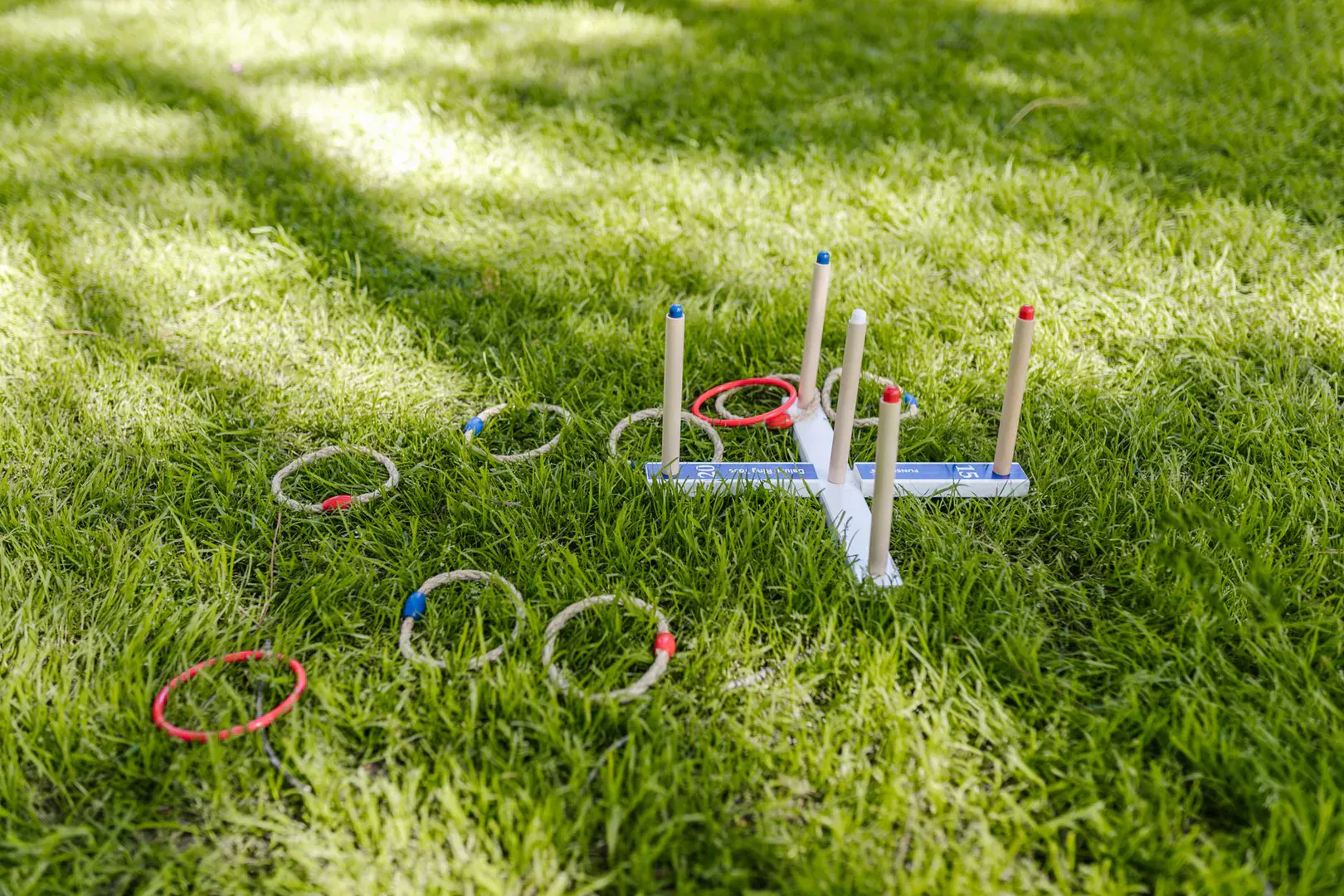
- A garden quoits base with scoring pegs and the values visible
- The rope rings supplied with your set; the Jaques example has four
- A flat lawn, patio or other suitable level surface
- A marked throwing line and enough clear room for the set
- A scorecard for turn points and running totals
Set it up
Garden quoits has no single universal pitching distance. Follow the instructions for your peg set, or agree a comfortable line before starting. Give all players the same line for the game, with any family adjustment agreed in advance. Metal-pit and slate-board distances do not define this garden setup.
Scoring
- Each quoit that lands and remains around a scoring peg earns the value printed on that peg or the base.
- Misses and rings merely leaning against a peg score zero in this garden version.
- Every player or side keeps its own turn points. Add them to the running total without cancellation.
- Agree a target or round limit before play and give everyone equal turns. With fixed rounds, highest total wins.
- This garden house finish uses complete extra rounds for a tie. Other quoits disciplines have different scoring and finish rules.
How to play
- Place the peg base. Put the garden base on level ground with every peg value visible. This version uses printed peg values, not metal-pit nearest-quoit scoring.
- Agree the finish and order. Choose a target score or a fixed number of complete rounds. Decide who starts and how many rings each player gets; use the same number for everyone.
- Take your turn. Throw your rings from behind the agreed line, trying to leave each one encircling a peg. In the Jaques four-ring example, throw all four before scoring the turn.
- Add the peg values. Add the printed values of pegs encircled by your rings. Misses score zero. Record the turn points and your new running total; this garden version has no cancellation.
- Clear and rotate. After agreeing the score, collect the rings for the next player. Complete the round so everyone has equal turns.
- Compare totals. After the agreed round limit, highest total wins. For a points target, finish equal turns before checking the result. In this garden house format, tied leaders play complete extra rounds until one leads.