
Ring Toss Rules
- Players
- 2 or more (singles or teams)
- Ages
- 4+
- Setup time
- Under 2 min
- Space
- A small flat area; about 10 to 15 ft of clear toss room
What you need
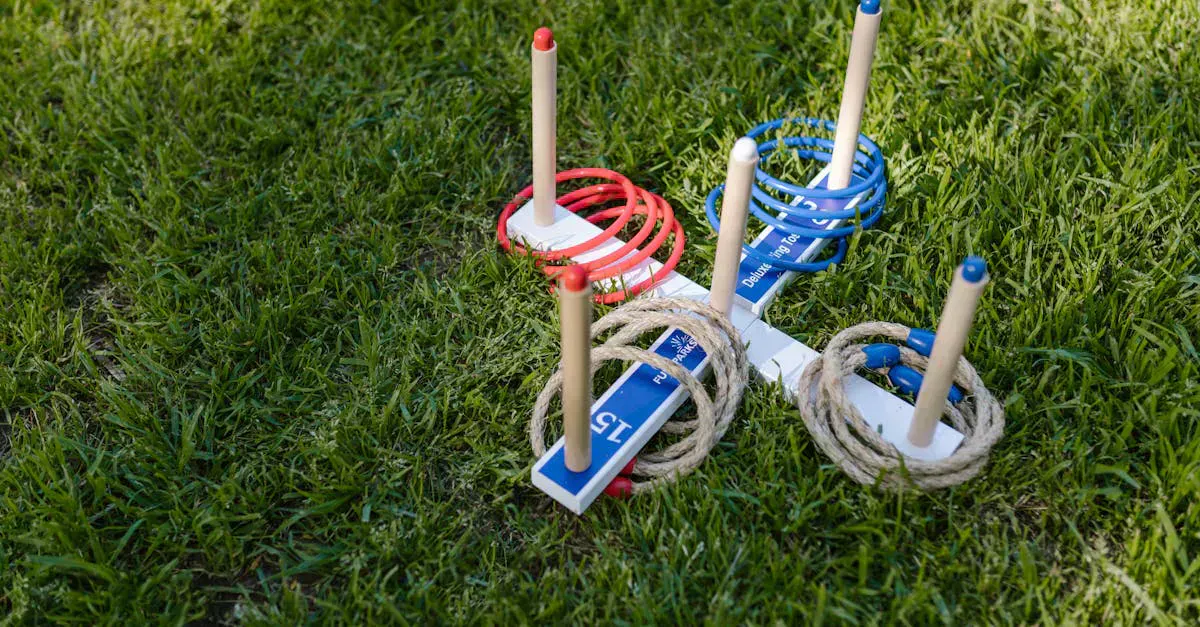
- A ring toss set: a peg base (often 1 center peg plus surrounding pegs) and a set of rings, usually 5 or 6
- Rings made of rope, rubber, plastic, or wood, typically 5 to 7 inches across
- A flat patch of grass, deck, or patio
Set it up
There is no single official distance for backyard ring toss. A good casual toss line is about 5 to 10 feet from the pegs, moved closer for young kids and back to 10 to 15 feet for competitive adults. For hook-and-ring, the toss line is shorter, usually around 6 to 8 feet, because you are swinging the ring rather than throwing it.
Scoring
- A ring that lands and remains around a peg earns that peg's printed value. Misses score zero.
- If your pegs have no values, agree one point per successful ring before starting.
- Each player or side keeps its own points in this version; there is no cancellation. Give everyone the same number of rings per turn.
- Agree a target or fixed number of rounds before starting. Check the finish after equal turns; with fixed rounds, the highest total wins.
- If players are tied at the finish, play complete extra rounds until one player or side leads.
How to play
- Set up the peg base. Place the peg base on flat ground with the printed values visible. If the pegs are unmarked, agree one point per successful ring for this game.
- Mark your toss line. Step back and set a toss line a few feet from the target. A casual distance is around 5 to 10 feet for peg ring toss; shorten it for little kids and stretch it to 10 to 15 feet for competitive adults.
- Toss an equal number of rings. Take turns throwing the same number of rings from behind the line. Toss all your rings, then count those that remain around a peg before clearing them for the next player.
- Add the turn score. Add the printed values for your successful rings, then add that sum to your running total. Misses score zero, and this version does not cancel another player's points.
- Finish after equal turns. Use the agreed target or round limit. Give everyone equal turns, then compare totals; if tied at the finish, play complete extra rounds until one player or side leads.